Quick answer
Find an experienced agility club or instructor, ask about its foundation pathway and discuss your dog’s physical readiness before introducing demanding obstacles. Beginner agility is about communication and carefully taught skills, not seeing how high your dog can jump. You can train for enjoyment without deciding to compete, and you do not need a full set of equipment at home.
What agility involves
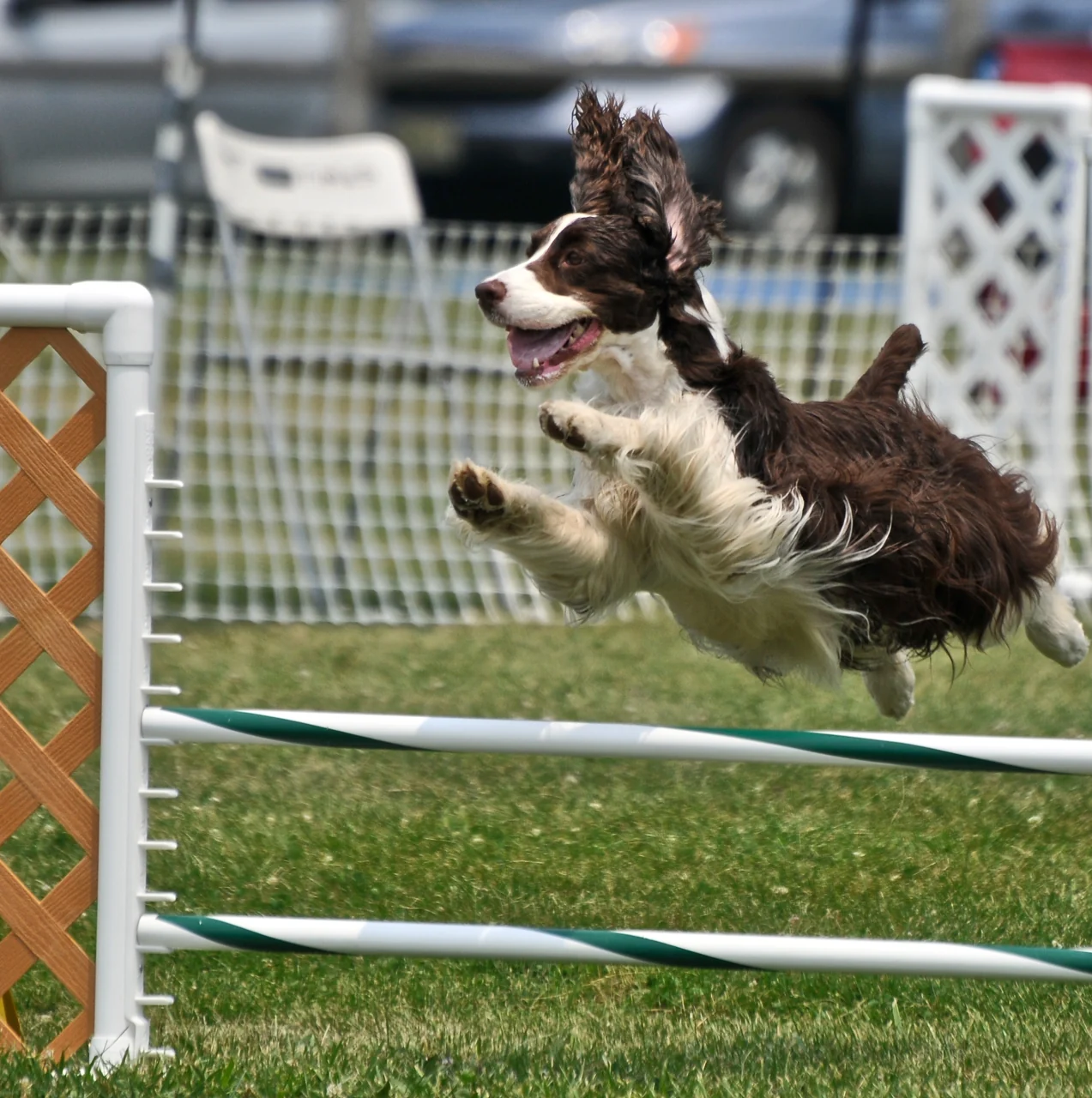
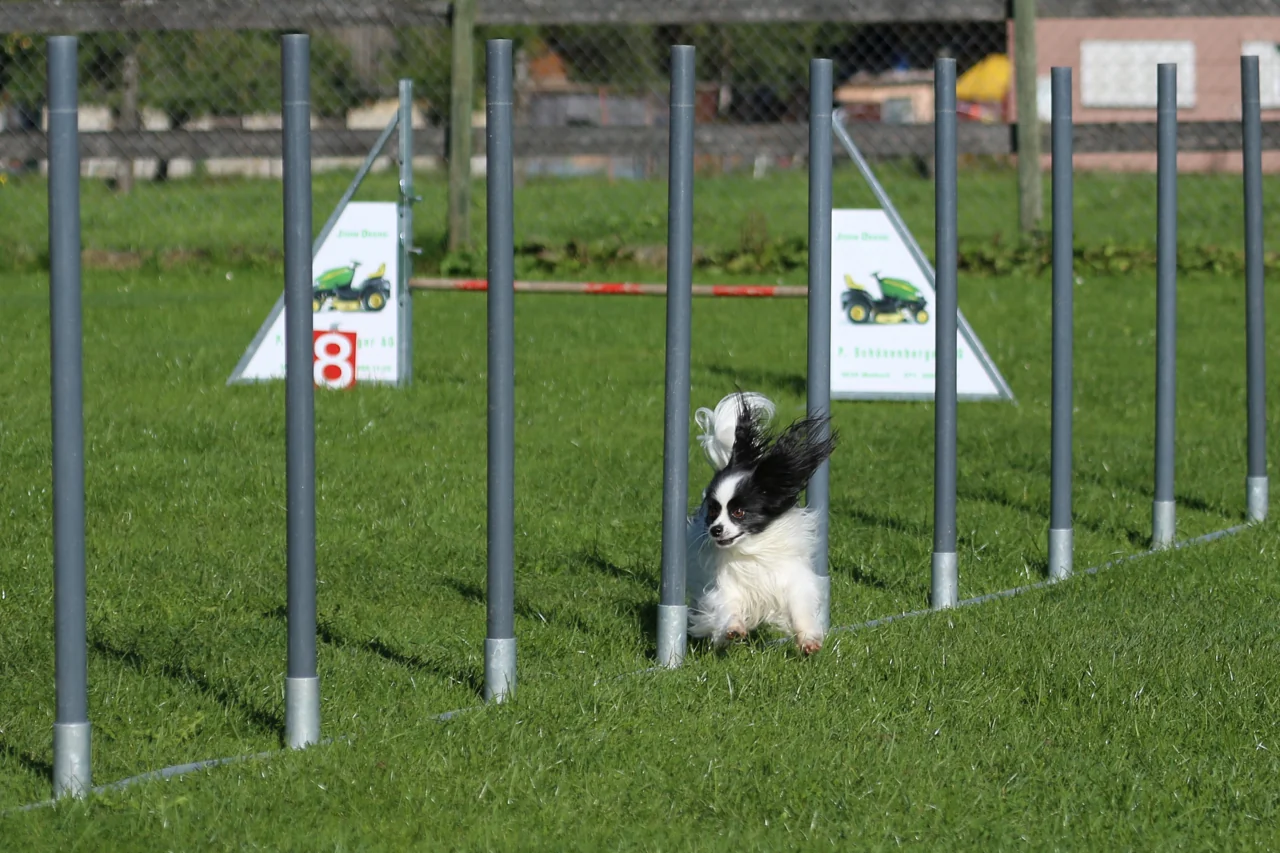
In agility, a handler directs a dog around an obstacle course. Depending on the course, equipment can include jumps, tunnels, weave poles and raised contact obstacles. The handler learns where to move and when to give cues; the dog learns how to respond and negotiate the equipment. Dogs Australia agility overview
A polished competition run is the result of many separately taught skills. It is not a sensible model for a dog’s first lesson.

Does my dog need to be a particular breed
No. Agility is not reserved for Border Collies. Their working background can help explain why people associate them with the sport, and Dogs Australia also notes the Shetland Sheepdog’s participation in agility. Neither is a promise that a particular dog will enjoy the activity or a reason to rule other dogs out.
Our Border Collie, Shetland Sheepdog and Poodle profiles offer broader temperament and care context. They are starting points for understanding the whole dog, not a ranking of agility potential.
Instead, ask whether your dog enjoys learning with you, can become comfortable in the training environment and is physically suited to the exercises. A small or mixed-breed dog can be considered on those same terms. Your instructor should help you separate “can join this class” from “should do this particular obstacle”.
Find the right starting class
Look for a foundation or beginner course rather than an open practice session. Start with your state canine body’s club listings; the Dogs Queensland directory includes agility and obedience clubs. Check each club’s own website and contact it before arriving with your dog.
Ask what “beginner” means there. Some courses assume existing obedience skills; others start earlier in the training process. For example, Agility Dog Club of Victoria’s foundation pathway includes an assessment of recall, a stay and reactions to people and dogs. Those are that club’s requirements, not one national entry checklist.
Tell the instructor if your dog struggles around other dogs, is uncomfortable being handled or has a health concern. An appropriate first step may be a different class or an individual assessment.
Separate class eligibility from physical readiness
A club’s minimum age or acceptance into a course does not establish that every obstacle is suitable for your dog. Foundation training and full-height, repetitive or fast obstacle work are not interchangeable.
Discuss the planned activity with your vet and a qualified coach experienced in agility, especially for a growing dog, a dachshund or a dog with a history of pain or injury. Ask which exercises are appropriate now and how progression will be judged. Do not assume lowering a jump removes every concern.
Dogs Australia itself advises veterinary consultation before agility for dogs with joint problems or excess weight. Individual advice is more useful than a blanket starting age from the internet. Dogs Australia agility guidance
Practise foundations rather than improvised obstacles
Ask your instructor which skills to work on between lessons. Useful topics to discuss include responding to a recall cue, paying attention around distractions, waiting briefly and settling between turns. The Pine Agility Dog Sports beginner course illustrates how much preparation can involve ordinary training and comfort in a group, rather than obstacle performance.
Keep home practice easy enough that your dog can succeed. Use rewards your dog values and stop or simplify when the task is not working. The RSPCA supports reward-based training.
Leave jump construction, raised planks and makeshift seesaws off your beginner shopping list. Let your instructor teach equipment skills using an appropriate setup instead of testing what your dog will climb or leap over.
Prepare for your first session
Request the club’s packing list. It may include a suitable lead and collar or harness, rewards, water, a bowl and closed shoes. Check how dogs wait between exercises and whether a crate or another rest arrangement is required. Do not assume a dog unfamiliar with a crate can simply be placed in one on arrival.
Allow time to find the grounds, toilet your dog and settle before class. Ask about parking, shade, wet-weather cancellations and heat policies. A club night may also include helping set up and pack away equipment, so check the actual arrival and departure times.
Checklist before you book
- What experience and training does the instructor have?
- Are methods reward-based, with no pressure to force a reluctant dog?
- What skills and health information are needed before enrolment?
- How are dogs separated and supervised between turns?
- How are surfaces, equipment and weather assessed?
- What does the full price include, and what is the cancellation policy?
- Can you stay recreational, and how is progress assessed?
Frequently asked questions
Can small dogs or mixed breeds learn agility?
They can be considered; agility is not reserved for large pedigree dogs. However, eligibility is different from physical suitability. Check the individual dog’s readiness, and ask about the relevant registration pathway if competition becomes a goal. Dogs Queensland agility
How much does it cost to get started?
Ask for a current written total covering membership, classes and required gear. Fees and inclusions vary, and old course listings may remain online. You can leave competition entries and specialist equipment out of the initial decision until you know whether you both enjoy it.
Do I need to be a fast runner?
Ask to watch a class and discuss your mobility with the instructor. Handling involves positioning and communication, but physical demands vary with the exercises and dog. A coach can explain possible adaptations without promising that every course will suit every handler.
The best first milestone is a class where you understand the task and your dog is comfortable learning it. Speed can wait.
Sources
- Dogs Australia agility and Shetland Sheepdog breed profile.
- Dogs Queensland agility and affiliated clubs.
- Agility Dog Club of Victoria foundation course.
- Pine Agility Dog Sports beginner course listing for 19 August 2026, used as an example of preparation requirements, not an available booking or fee quotation.
- RSPCA Australia training guidance.