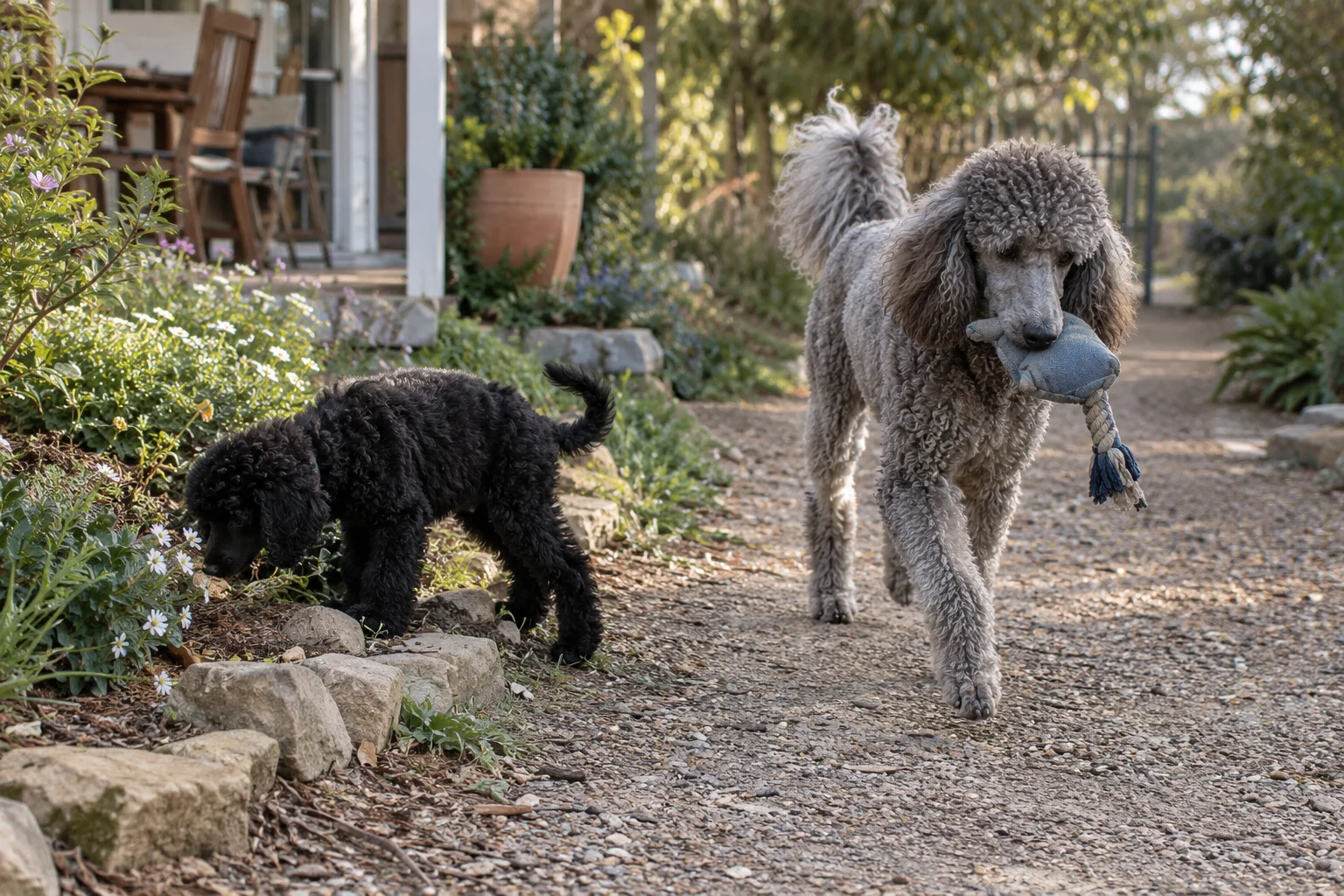
Poodles began as water retrievers, and many still combine athleticism, close attention and enthusiasm for learning. Dogs Australia recognises three sizes: Standard, Miniature and Toy. Size changes practical needs, but all are Poodles—not separate designer crosses—and all need training, enrichment and coat care.
- Typical fit: engaged owners who enjoy teaching and can maintain a demanding coat
- Activity: moderate to high, varying by size, age and individual
- Coat: continuously growing curls requiring brushing and clipping
- Training: highly responsive to clear, reward-based lessons
- Big commitment: professional grooming or learning to groom safely at home
What are the three Poodle sizes?
Under the Dogs Australia standard, Standards are at least 38 cm at the shoulder, Miniatures are 28–38 cm and Toys are under 28 cm. Do not choose on height alone. Ask about the adult dogs’ energy, confidence, health and ability to settle. Very small puppies require careful handling; Standards need more physical space and appropriately scaled exercise.
Temperament and training
Poodles are commonly confident, people-oriented and quick to spot patterns. That makes them rewarding to train, but it also means boredom can become barking, stealing or inventive household entertainment. Practise recall, loose-lead walking, calm greetings, handling and settling from the beginning.
Keep lessons brief and varied. Scent work, retrieving, trick training and food puzzles can provide useful mental work. Socialisation should be positive and gradual rather than forcing a puppy to interact with every dog or stranger.
Exercise and Australian weather
Healthy adult Poodles generally enjoy daily walks, play and training. Standards may relish longer adventures, while the smaller varieties still need real exercise—not just being carried. Adjust activity for growth, health and temperature. In hot weather, use cooler hours, shade and water, and check the ground before walking.
Does a Poodle shed?
Poodles tend to release less loose hair around the home than many breeds, but “low shedding” does not mean no maintenance or a guarantee for allergy sufferers. Allergens can come from dander and saliva as well as hair. Spend time with adult Poodles before deciding whether the breed works for someone with allergies.
Brush through the coat regularly, including friction points behind the ears, under the collar and around the legs. Most pets need clipping on a recurring schedule. Begin gentle handling of paws, face, ears and body in puppyhood so grooming does not become a battle. Check ears and teeth routinely and ask your groomer to explain what can safely be done between appointments.
Health questions for breeders
Testing should match the Poodle’s size and family line. Ask the breeder which eye, joint and DNA assessments were performed on both parents, request copies and have your vet help interpret them. Also discuss any family history of epilepsy, skin disease, eye problems or joint disorders. Standard Poodle owners should learn the warning signs of gastric dilatation-volvulus (bloat), a life-threatening emergency requiring immediate veterinary care.
Is a Poodle right for you?
A Poodle may suit an owner seeking an intelligent, active companion and prepared for lifelong grooming. It may be a poor fit if coat care will be postponed, the dog will be left without activity for long periods or “hypoallergenic” is treated as a guarantee. Choose a size and individual whose real needs fit your household rather than choosing on hairstyle alone.