
A Schnoodle is a Schnauzer–Poodle cross, not one predictable package. Before imagining a small curly companion, find out which Schnauzer and Poodle varieties are in the family. A Miniature Schnauzer crossed with a Toy or Miniature Poodle presents a different planning question from a cross involving a Giant Schnauzer and Standard Poodle. The name alone cannot promise adult size, a particular coat or an easygoing personality.
What might everyday life look like?
Meet the individual dog rather than shopping for a stereotype. Ask how the parents behave around visitors, other dogs and everyday noise. Then ask what the puppy has actually experienced: gentle handling, household sounds, short separations and positive introductions. A lively dog can be enjoyable to train while still needing help to settle.
Plan a daily rhythm that includes walks, opportunities to sniff, short reward-based training sessions and quiet rest. Finding scattered food or learning to settle on a mat can be more useful than trying to exhaust a dog with repetitive ball chasing. Match activity to age, fitness and veterinary advice. Small size does not remove the need for enrichment or manners.
For a family, decide who will handle grooming, daytime toilet breaks and training before bringing the dog home. Supervise children, provide a retreat that they leave alone, and teach them to invite interaction rather than lift or hug the dog. If you work away all day, make a realistic care plan rather than assuming companionship will happen around your schedule.
Coat care is part of the budget
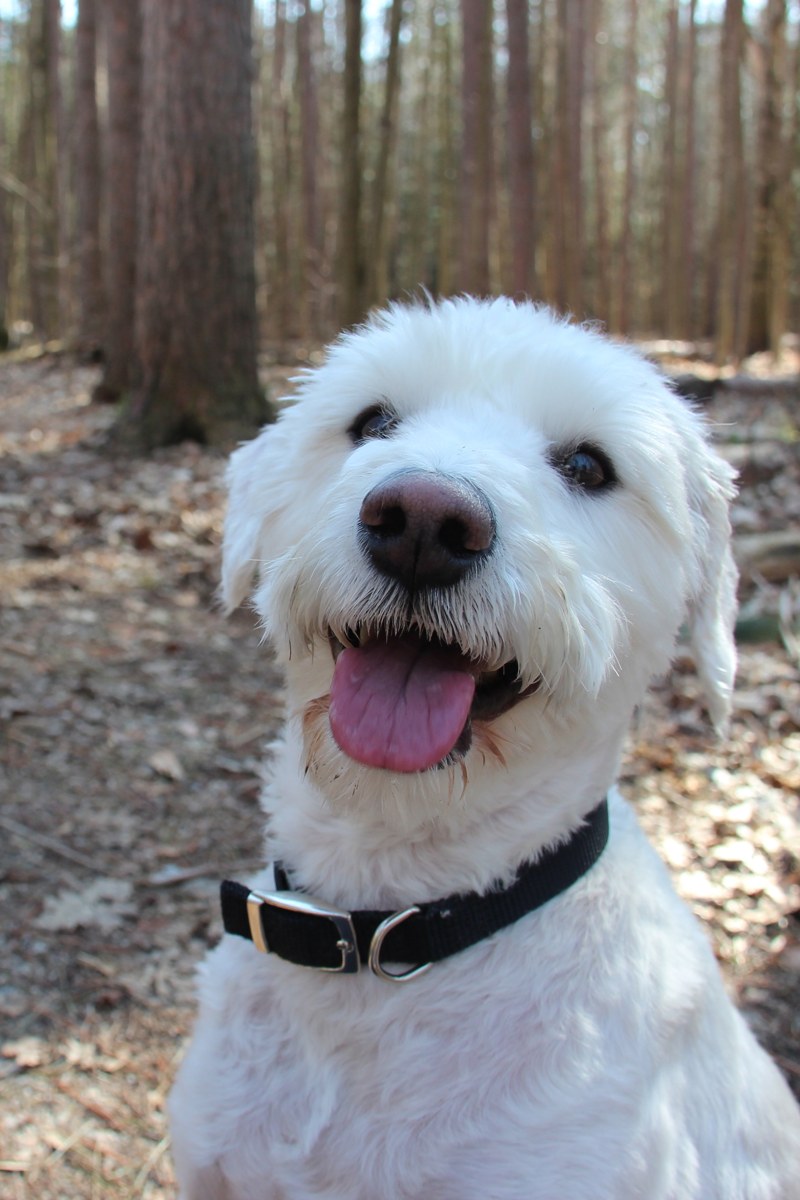
A Schnoodle may have a curly, wavy or more wiry-looking coat. Treat “low shedding” as a possibility, not a maintenance plan or allergy guarantee. Ask a groomer to assess the actual coat and demonstrate brushing and combing down to the skin. Pay attention to friction areas behind ears, under a harness and around legs. Budget for professional grooming where needed; a shorter practical trim still needs upkeep.
Health questions worth asking
Screening should match the actual parent varieties. For a Miniature Schnauzer parent, ask for current specialist eye-screening records: hereditary cataracts and progressive retinal atrophy are among the concerns addressed by the Schnauzer Club of Great Britain.
For the Poodle parent, recommendations differ by variety. Toy and Miniature guidance includes eye assessment, patella evaluation and prcd-PRA DNA testing; Miniature guidance also includes hip evaluation. Standard Poodle recommendations are different again. Use the Poodle Club of America health statement as a starting point for a veterinary discussion, not a universal crossbreed checklist.
Ask for identifiable reports, their dates and an explanation of the results. A large commercial DNA panel does not replace appropriate physical screening, and a healthy-looking puppy is not proof of a healthy family history. No testing programme guarantees lifelong health.
Best fit: a household that wants to invest in training and coat care, and is comfortable choosing the dog in front of them rather than a guaranteed designer formula. An adult rescue dog may offer clearer information about size and established care needs.
Source check: 27 October 2026. Additional parent overview: AKC Miniature Schnauzer. No cross-specific prevalence or lifespan claimed.