

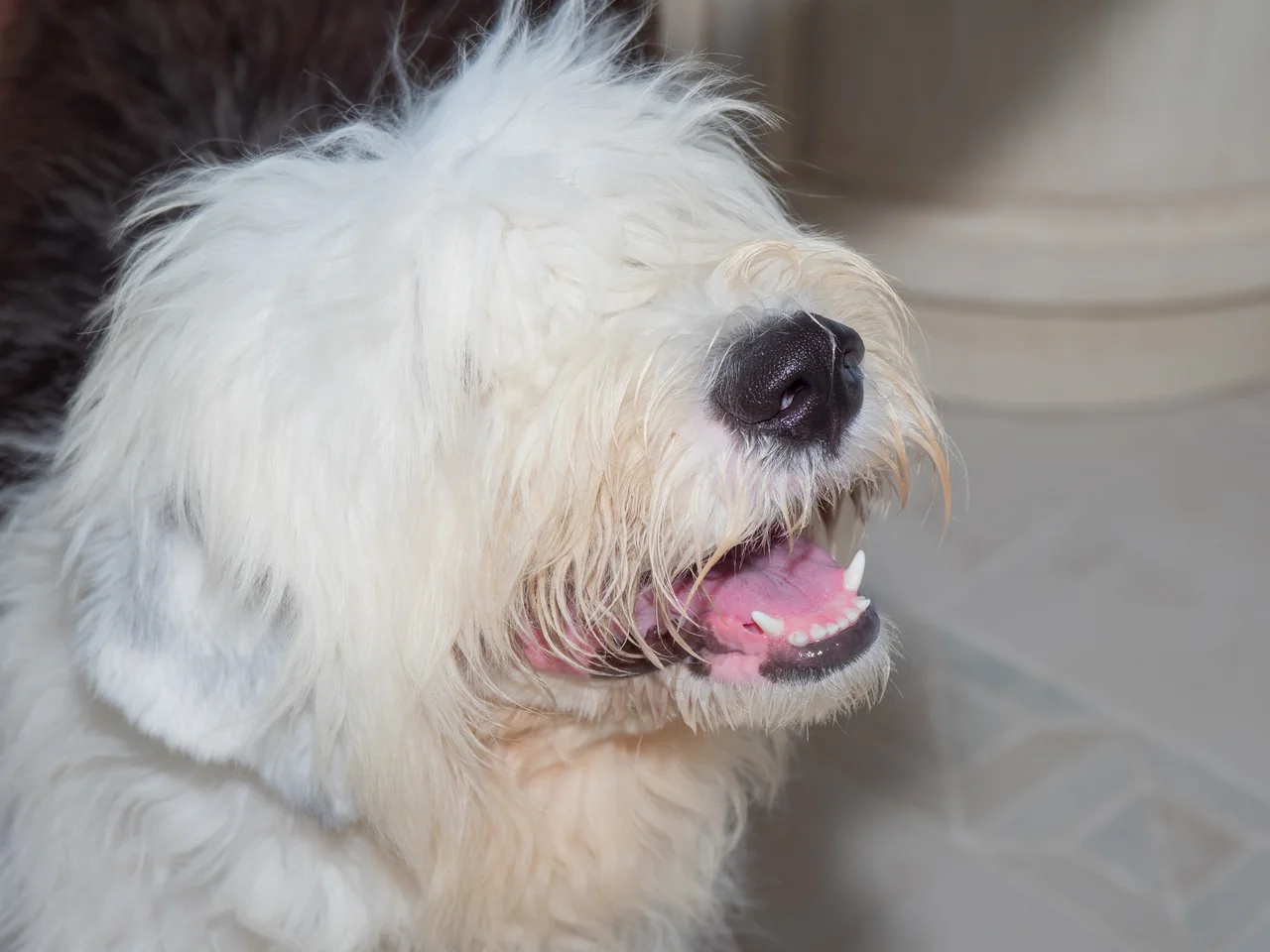
The Old English Sheepdog looks wonderfully cuddly. The useful question is whether you want the dog underneath that coat: a large, active companion who needs your time both outdoors and at the grooming brush. Choose the lifestyle, not just the photograph.
A drover, not a decorative dog
Developed in England, the Old English Sheepdog helped move cattle and sheep to market. Its working background explains why a shaggy appearance should not be mistaken for a low-energy personality. The Victorian breed club describes a dog that enjoys physical activity, learning and family company. Old English Sheepdog Club of Victoria, American Kennel Club
Many are affectionate and playful, but individuals differ in confidence, sociability and enthusiasm. Meet adult relatives when possible; for a rescue dog, ask about behaviour in a foster home. A breed description cannot tell you how one dog will cope with your noisy kitchen or visiting grandchildren.
Everyday life and training
Plan varied walks, opportunities to sniff, manageable play and short learning sessions. Food searches or simple scent games can add interest without turning every outing into a workout. The breed club recommends both movement and mental activity, with care in hot weather. Match exercise to age, fitness and veterinary advice rather than treating an hourly target as a rule for every dog. Victorian club care guide
Teach loose-lead walking and calm greetings while the puppy is still easy to manage. Reward settling as well as activity, and practise comfortable, gradual periods apart. Reward-based training is the humane approach: build the behaviour you want rather than using intimidation to control a large dog. RSPCA Victoria training guidance
An Old English Sheepdog may suit a family that welcomes a substantial dog into everyday life. Adults should actively supervise children and provide a quiet dog-only resting area. Introduce resident animals gradually; friendliness is not guaranteed by breed. In a small home, consider practical space for resting, grooming and separation, not just whether a dog bed fits. Long, lonely days would make this an unconvincing choice.
The coat is a welfare responsibility
This is not a wash-and-go breed. Brush and comb thoroughly, including areas prone to tangles such as behind the ears and beneath the legs. Mats can become painful. Ask a groomer to demonstrate a workable routine and discuss a manageable pet trim; budget for professional help before bringing a puppy home. Keep grooming sessions gentle and build tolerance gradually. Victorian club grooming guidance
Health questions worth asking
Ask for actual parental screening results, not simply “vet checked”. Hip and eye assessments are important discussion points. The American breed club also highlights thyroid screening and DNA tests including exercise-induced collapse and MDR1 drug sensitivity, with additional tests recommended. Those are useful questions for an Australian breeder and vet, not a statement of Australian registration rules. Screening reduces some risks; it does not guarantee a healthy puppy. OES Club of America testing guidance
Tell your vet about any known genetic results before medication is prescribed. Seek individual advice for changes in movement, vision or tolerance of exercise rather than diagnosing a breed condition yourself.
Quick questions
Are Old English Sheepdogs good family dogs? Some are excellent companions for engaged families. Size, individual temperament, supervision and time together matter more than the reputation.
Can an Old English Sheepdog live in a small house? Possibly, if exercise, companionship and usable indoor space are genuinely available. A larger garden does not replace those needs.
Is the coat easy to maintain if kept shorter? A suitable trim can simplify care, but brushing, skin checks and grooming appointments still belong in the budget.
Best fit: Best considered by people who enjoy a sociable, substantial dog and can sustain grooming as part of ordinary life—not as an occasional cosmetic task.