

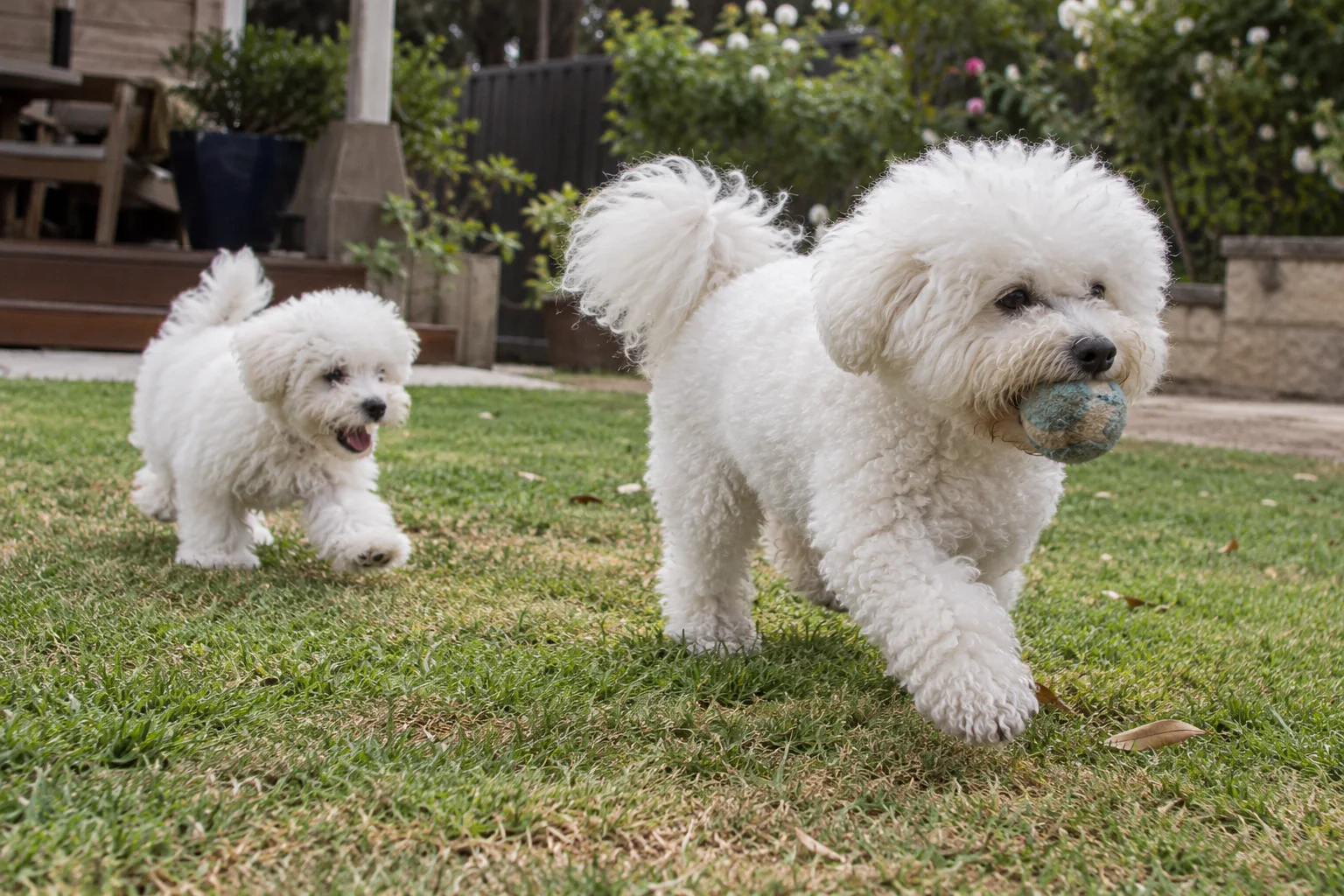
Can a Bichon live happily in a flat?
A Bichon can be a good candidate when owners provide daily interaction and outings. Compact size makes transport and indoor training easier, but does not remove the need to explore outside. Think about the whole day: where the dog rests, who takes it out, and what happens when everyone leaves.
Company, barking and settling
Bichons are companion dogs and may find prolonged isolation difficult. Practise brief comfortable absences and reward independent resting without shutting the puppy away to cry. Use a camera to understand barking during departures. Barking at hallway traffic needs management too: move the bed away from the entrance and reward calm responses to quiet versions of everyday sounds.
Exercise and practical toilet training
Combine walks, sniffing, play and short reward-based lessons. Teach recall, calm greetings and cooperative grooming. A puppy needs frequent toilet opportunities, including after sleep and play; arrange help if work prevents that. If a tray is necessary, keep its location and surface consistent, clean it promptly and reward successful use. Never punish an accident discovered later.
Grooming is the major commitment
The coat needs thorough brushing and combing, plus regular professional grooming or competent home clipping. Surface brushing can leave mats underneath. Ask a groomer to demonstrate how to check friction areas and introduce tools gently. Lower shedding does not guarantee freedom from allergies, and matting should not be left until the next convenient appointment.
Health, budget and owner fit
Ask the breeder for relevant parent health results and discuss eyes, kneecaps and family health history with your vet. Plan dental care and have persistent scratching, sore ears or limping assessed. Include grooming fees in the ordinary household budget, not just emergency spending. A Bichon is a better fit for someone who enjoys close companionship and coat care than someone seeking a hands-off pet.