Can a big Greyhound live in a small home?
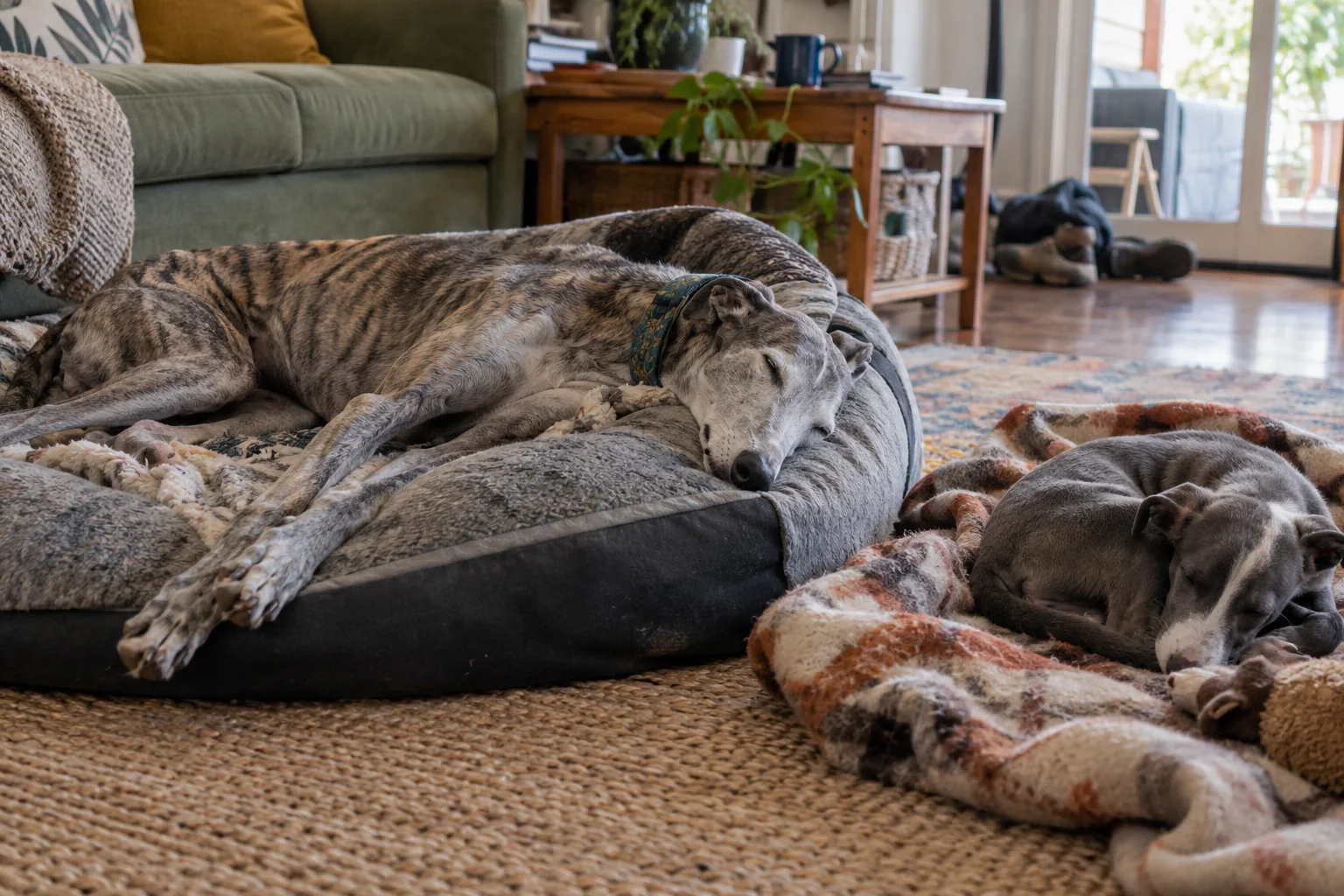
Yes, some can. Floor area alone tells you little about whether a dog will cope. A calm adult with suitable walks and a spacious resting place may adapt well. GAP Queensland accepts apartment applications and asks about balcony arrangements. Discuss your actual building, lift access and work routine with the adoption team rather than choosing from appearance alone.
Lifts, stairs and settling into retirement
A new home may contain unfamiliar flooring, glass doors, household noises and stairs. Use non-slip surfaces and patient reward-based introductions. Some dogs are unsuitable for stairs, so check before adoption rather than assuming practice will solve it. Allow a quiet settling period with predictable routines and a resting place that visitors and children respect.
Exercise, chase behaviour and other pets
Greyhounds need regular outings, sniffing and appropriate enrichment even if they sleep for much of the day. Their chase instinct requires careful management. Use secure equipment and suitable enclosed areas; a reliable response indoors does not prove recall around wildlife. Discuss cats and small pets honestly with the adoption organisation. Never infer compatibility from the breed label or one calm meeting.
Barking, alone time and toilet access
A quiet dog at a kennel may behave differently in a new home. Build comfortable absences gradually and arrange help when needed. Predictable toilet trips after waking, eating and before bed are useful during adjustment. Avoid expecting an adult dog to understand your building’s route or hold on through a full workday immediately.
Care, costs and the right match
A short coat is relatively easy to maintain, but teeth, nails, skin and general veterinary care still matter. Provide soft bedding and suitable warmth in cooler weather, while preventing overheating in sunny rooms. Budget for large-dog equipment, food, routine care and potential treatment. Ask for the dog’s medical history, behaviour assessment and support available after adoption. An individual matched to your home is more useful than a promise that every Greyhound is a couch potato.