Halloween falls on 31 October. For Australian households, an open front door and a bucket of chocolate can create problems long before the costumes come off. RSPCA Australia issued a fresh Halloween warning on 20 October 2026. This guide focuses on the decisions to make before visitors arrive and what to do if something goes missing.
What should I do if my dog eats Halloween chocolate?
- Move the remaining food out of reach and keep your dog safely with you.
- Call the vet. Have the packet ready, including the ingredients and cocoa percentage if listed.
- Explain your dog’s weight, the most that could be missing, when it happened and any signs you have noticed. Say if wrappers were swallowed too.
- Follow the clinic’s instructions. Do not try to make your dog vomit or give home remedies unless a veterinary professional specifically directs you.
Chocolate contains theobromine and caffeine. Risk depends on the type, amount and dog’s size: dark and baking chocolate are generally more concentrated than milk chocolate. White chocolate is not a suitable dog treat either. An online calculation cannot account for an uncertain amount, other ingredients or swallowed packaging.
Vomiting, diarrhoea, unusual restlessness, thirst, tremors or seizures can occur. Do not wait for these signs before calling. A collapsing dog, seizures or breathing difficulty needs emergency veterinary care immediately.
Are sugar-free lollies dangerous for dogs?
Some contain xylitol, also called birch sugar or wood sugar. Not every lolly contains it, so take the actual packaging rather than guessing from the brand or the words “sugar-free”. Xylitol can cause a dangerous fall in blood glucose and liver injury in dogs. Suspected ingestion is an emergency, including when there are no symptoms yet.
Check gum, mints, sweets and sugar-free baked goods in mixed treat bags. If ingredients or quantities are unknown, tell the vet that clearly. Do not assume an apparently small amount is harmless.
What if my dog swallowed the wrapper?
Packaging creates a separate choking or ingestion risk. Tell the clinic what material is missing and approximately how much. Keep an identical wrapper or photograph to show them. Chocolate and packaging need to be considered together; finding an empty packet does not establish that only the food was eaten.
A practical plan before the doorbell starts
Our suggested household routine is to give one adult responsibility for the treat stash and another for checking the dog’s space. Put collected sweets in a closed cupboard as soon as children come home. A bucket on a low table or a schoolbag on the floor is still accessible.
- Prepare a familiar, comfortable room away from the front door, with water and the dog’s usual bed. Use our safe-room guide to choose a setup your dog already tolerates.
- Explain to children that their sweets stay separate from dog treats. Supervise any interaction with visiting children.
- Keep the dog secured before opening the door, and tell guests which doors must stay shut.
- After the evening, check under furniture and empty accessible rubbish. Repeat the check the next morning.
Should my dog wear a costume?
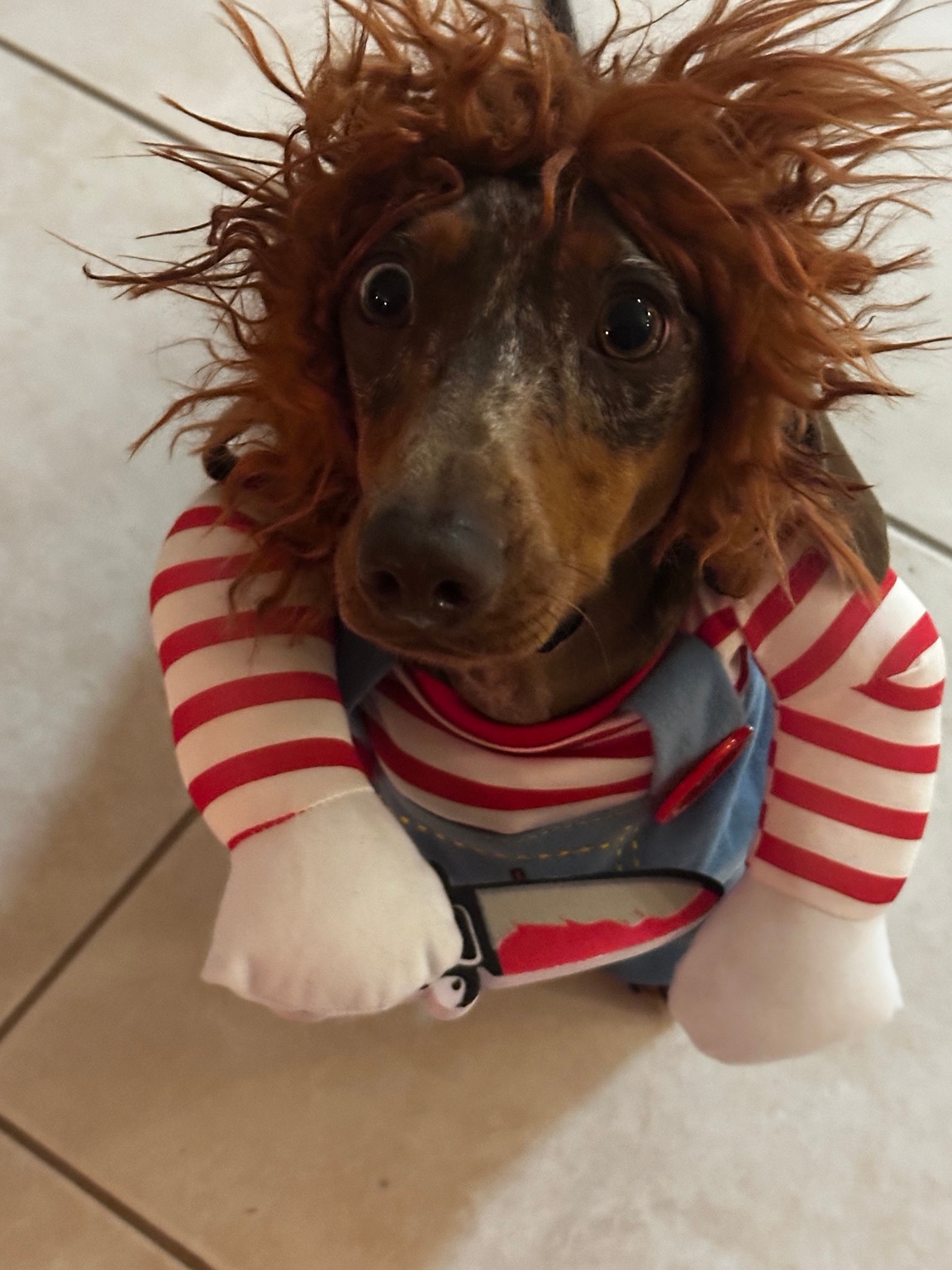
Skip it if your dog is uncomfortable. RSPCA Australia advises removing costumes when a pet freezes, struggles, tries to escape or shows discomfort. Quiet company is a perfectly good celebration. Keep small decorations and dangling materials out of reach, and use safely positioned battery lights rather than open flames.
Make the prevention last beyond Halloween
The same cupboard-and-clean-up routine works for Christmas advent calendars and Easter eggs. If food stealing is a regular problem, see our bin-raiding and food-stealing guide. Training helps, but physical barriers are still needed when tempting food is unattended. For a separate dog treat, browse our recipe bank and follow the portion and storage guidance.