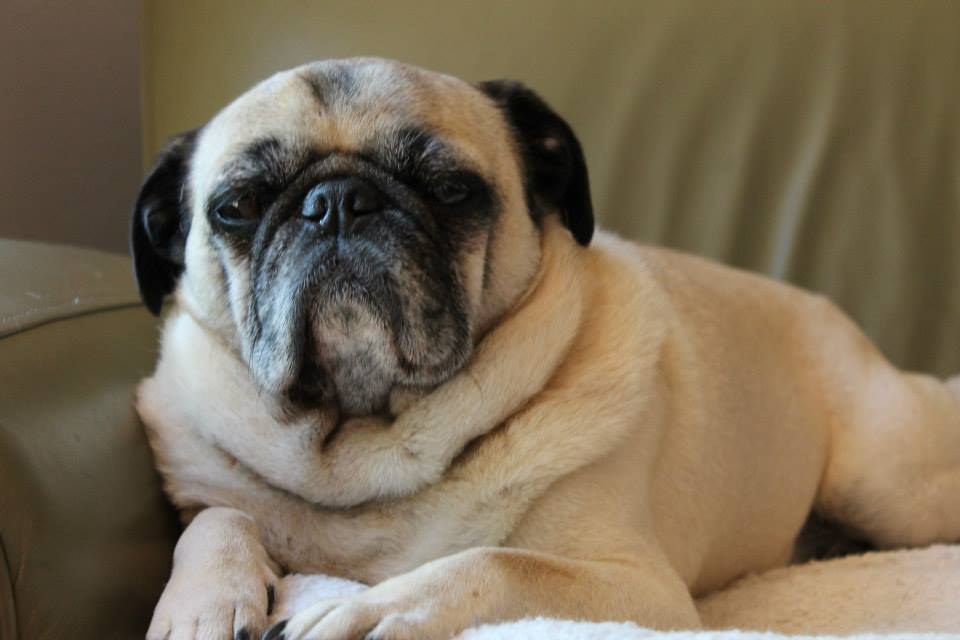
Pugs often attract people looking for a sociable, expressive companion. Their compact build and interest in family life can be appealing, but describing them as easy-care would leave out the most important part of the story. Their health risks deserve attention before a purchase or adoption decision, not only after problems appear.
Temperament and size
The Dogs Australia standard describes a lively, even-tempered toy breed and gives an ideal show weight of approximately 6.3–8.1 kg. An individual dog's healthy weight depends on its frame and body condition; do not feed to reach a show-standard number. The standard also rejects exaggerated features that interfere with the eyes or nose.
A breed description is not a behavioural guarantee. Meet the dog, ask about its experience with children and other animals, and consider your daily routine. An adult rescue assessment can offer useful information that a puppy's appearance cannot.
Why health must lead the decision
A Royal Veterinary College study compared UK veterinary records and found Pugs had increased odds of many disorders, including obstructive breathing problems, corneal ulcers and skin-fold disease. This population-level evidence does not predict one dog's future, but it makes a casual recommendation to buy a Pug inappropriate.
Ask your vet about the implications of choosing a flat-faced dog and consider alternatives with less exaggerated anatomy. For a Pug you already own, seek an individual care plan rather than assuming its symptoms are unavoidable.
Noisy breathing is not a personality trait
Cambridge's veterinary guidance explains that breathing problems can be missed when a dog is resting and become more apparent with activity. Snoring, repeated snorting, poor exercise tolerance and disturbed breathing should not be dismissed as simply what Pugs do. Ask about an appropriate respiratory assessment by a veterinarian; do not conduct a strenuous home fitness test.
Severe breathing difficulty, collapse or blue-tinged gums need emergency veterinary care. Plan ahead for hot Australian days with a cool indoor environment and safe transport. Your vet can advise suitable activity for the individual dog.
A manageable everyday routine
Provide gentle, appropriate walks, sniffing and short training sessions, with plenty of opportunity to rest. Reward settling, coming when called and accepting handling. A game of finding a toy in a cool room may be more suitable than a long, hot outing. Avoid making every reward an extra food portion: discuss the overall diet and healthy body condition with your vet.
The coat is short, but that does not remove care responsibilities. Brush regularly and ask for a demonstration of appropriate skin-fold, eye-area, nail and dental care. Do not experiment with human creams or eye products. Changes in comfort, redness or discharge deserve professional assessment.
Family suitability and budgeting
Supervise all interactions with children and protect the dog's rest. A Pug is not a substitute for a robust toy or a guaranteed playmate. Before committing, price routine care, insurance terms and an emergency reserve, including the possibility of specialist treatment. Ask a breeder or rescue for health records, known symptoms and previous procedures. A cheerful expression should never outweigh evidence about the dog's ability to breathe and move comfortably.